
House Music: Origins, Reference Tracks, & more
Time to Read – 4 minutes
House Music is generally considered “club music” due to it’s characteristics that make people want to move. House music originated in the early-1980s in Chicago and is structurally built in a core recipe of kick, bass, piano or synth stabs, and functional vocals. This is why house has expanded into additional subgenres and styles like; deep, tech, progressive, Afro, bass, and melodic house music.
New to dance music? Click here – What Is EDM?
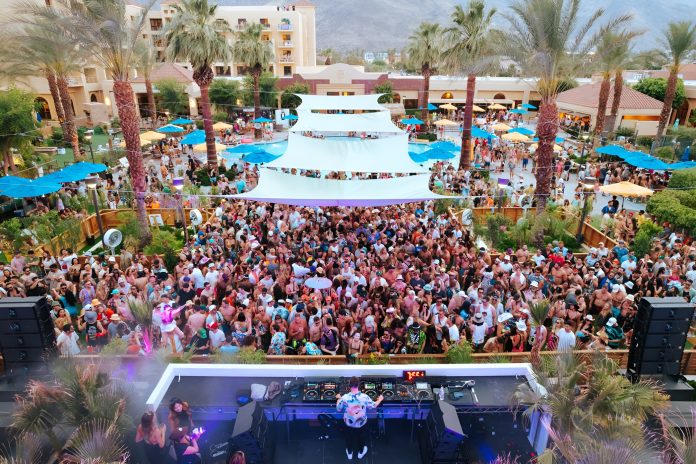
Source: Festival photography; artist press materials
Frequently Asked Questions FAQs
Quick Facts
| When did House originate? | Early 1980s |
| Where did House originate? | Chicago, USA |
| Notable Artists | Frankie Knuckles, Larry Heard, Ron Hardy; modern: John Summit, Fisher, Peggy Gou, Black Coffee |
| BPM Range | Approx. 118–130 BPM |
| Key Characteristics | 4/4 kick, off-beat hi-hats, claps, repeating basslines, piano/synth stabs, DJ-friendly structure |
Upcoming Festivals
EDSea
Atlantic Ocean
Lost Lands
Thornville, OH
EDC Orlando
Orlando, FL
Austin City Limits
Austin, TX
Sponsored
What is House Music?
House music is a practical form of dance music and is arguably the most popular subgenre of EDM. The rhythm is a simple four-on-the-floor pulse, strengthened by off-beat hi-hats and claps make people want to move. Harmonically, producers rely on short piano or organ chords and compact synth motifs.
For a wider map of related styles, see our EDM subgenres guide.
Reference Tracks
Another Love (Zwette Edit) – Tom Odell
Shook Pt. 3 – Nick Morgan
BBL Drizzy (House Edit) – REDD
The Origins & Evolution of House
House took shape in Chicago when DJs extended disco with drum machines and tape edits for longer, continuous sets. From there, the sound moved through Detroit and New York and onto the UK and Ibiza, where acid house, superclubs, and seasonal residencies scaled it up. By the 2000s and 2010s, CDJs, affordable production software, and digital stores/streaming had lowered barriers for both DJs and producers. Today, house remains a global constant: diverse in style, built for the floor, and adaptable to new tools without losing its core logic.
1980s
The Origins of House Music
Chicago clubs like The Warehouse and the Music Box set the template with DJs such as Frankie Knuckles, Ron Hardy, Larry Heard, and Jesse Saunders.
1990s
Early Expansion & Progression
The sound spreads through the UK and Europe. Acid house, superclubs, and labels like Strictly Rhythm and Defected cement house on radio and in charts.
2000s
Technological Evolution
CDJs and software reshape DJing; forums and blogs spread regional scenes. Tech house and electro-leaning styles rise in clubs.
2010s
Explosive Recognition
Festival mainstages globalize house; underground rooms sustain deeper, minimal strands alongside melodic and progressive variants.
2020s – Present
Current Stages of House Music
Tech house dominates sales charts; Afro and melodic house gain reach on streaming and social platforms; club-first structures continue to anchor festival programming.
Variations of House
House branches reflect different priorities: percussion-first (tech house), low-end emphasis (bass house), or chant-led builds (Afro house).
Tech House
Tech house blends house’s steady four-on-the-floor groove with the stripped-back percussion and minimalism of techno. The style emphasizes dry, loop-driven drums, sub-heavy basslines, and functional vocal snippets rather than full melodies. Since the late 2010s, it has become one of the most dominant subgenres worldwide, fueled by artists like Green Velvet, Fisher, and John Summit.
Bass House
Bass house fuses house rhythms with the aggressive low-end of bass music and dubstep. Tracks keep the steady four-on-the-floor beat but features dubstep’s popular “wub” sound and harder drops. The style gained traction in the mid-2010s through artists like AC Slater, Jauz, and Joyryde, making it a staple in North American festival lineups.
Afro House
Afro house is a very minimal style of house music. The style emphasizes atmosphere and emotional depth over flashy drops, making it a favorite for extended sets and sunrise/sunset sessions. Artists like Black Coffee, Da Capo, and Shimza have been central in pushing Afro house.

Final Thoughts
Four decades later, house still anchors global dance culture because its design is durable, widely recognizable, and structurally built for the DJ. Styles and tools change, but the floor-first logic keeps house relevant from small rooms to main stages.
More Resources
Listen Now

Wub Radio #052 | Weekly EDM Radio
40,000 Ravers Occupy Abandoned French Military Base to Protest Anti-Rave Law